
Moving an established online store from osCommerce to WooCommerce is an important decision for any ecommerce business. The process involves more than transferring products to a new platform. Businesses also need to consider customer records, order history, product categories, images, website content, payment methods, shipping settings, URLs, and existing search engine rankings.
A successful osCommerce to WooCommerce Migration should protect important store information while creating a more flexible ecommerce environment. WooCommerce works with WordPress and gives businesses control over their store design, functionality, extensions, and integrations.
However, the migration needs proper planning. Differences between the two platforms can affect product structures, customer data, order records, extensions, and website URLs. Without a clear migration strategy, businesses may face missing information, broken links, or problems with store functionality.
This guide covers 10 companies that businesses can consider when planning an osCommerce to WooCommerce migration. It also explains the migration process, important requirements, and factors to review before selecting a development partner.
Why Businesses Migrate From osCommerce to WooCommerce
Businesses may consider moving from osCommerce when their existing store no longer meets their technical, operational, or growth requirements.
WooCommerce provides a WordPress-based ecommerce environment with access to themes, plugins, extensions, and custom development options.
Common reasons for considering this migration include:
- Greater flexibility in website design and customization
- Integration with WordPress content management
- More options for ecommerce extensions
- Easier management of website content and products
- Access to a wider range of developers and service providers
- Better opportunities for custom functionality
- Integration with marketing and business tools
- More control over store structure and user experience
- Opportunities to improve mobile shopping
- A flexible foundation for future ecommerce development
Businesses can also review the platforms involved in the transition through these resources on osCommerce, WooCommerce, WordPress, and e-commerce.
What Should an osCommerce to WooCommerce Migration Include?
A complete migration should cover the store’s data, design, content, functionality, SEO, and integrations. Before starting, businesses should prepare an inventory of everything that needs to move.
Product Data Migration
Product information is one of the most important parts of an ecommerce migration.
Depending on the existing store, this may include:
- Product names
- Product descriptions
- Product IDs
- SKUs
- Prices
- Special prices
- Product images
- Inventory quantities
- Product attributes
- Product options
- Variations
- Tax information
- Downloadable products
- Manufacturer details
The migration team should map the existing product fields to the correct WooCommerce fields and check the imported information before launch.
Product Categories and Structure
The existing osCommerce category structure may need to be adjusted for WooCommerce.
This can include:
- Main product categories
- Subcategories
- Product tags
- Product attributes
- Category descriptions
- Category images
- Product relationships
- Store navigation
A clear category structure makes it easier for customers to find products and helps administrators manage the new store.
Customer Data Migration
Customer information may include:
- Customer names
- Email addresses
- Phone numbers
- Billing addresses
- Shipping addresses
- Account information
- Customer groups, where applicable
The migration team should review the source database and determine how customer records will be mapped into WooCommerce.
Order History Migration
Historical orders are important for customer service, business reporting, and record keeping.
Depending on the project requirements, order migration may include:
- Order IDs
- Customer details
- Purchased products
- Product quantities
- Order totals
- Taxes
- Shipping charges
- Payment details
- Order statuses
- Order dates
The migrated order records should be checked to ensure that product and customer relationships are maintained correctly.
Reviews, Coupons, and Other Store Information
Businesses may also need to migrate or recreate:
- Product reviews
- Review ratings
- Coupon codes
- Discount rules
- Manufacturers
- Product attributes
- Tax settings
- Shipping zones
- Store policies
- Custom fields
Some information may require a custom migration process depending on how the existing osCommerce store stores it.
Website Content and Media
The migration should also consider content outside the product catalogue.
This may include:
- Website pages
- Blog posts
- Product images
- Category images
- Banners
- PDFs
- Downloadable files
- Landing pages
- Contact information
- Privacy policies
- Terms and conditions
The business should decide which content needs to be transferred, updated, combined, or removed.
Why SEO Planning Matters During Migration
Changing an ecommerce platform can affect organic search performance if the website structure, URLs, metadata, or internal links change without proper planning.
A complete SEO migration plan should include:
- Existing URL inventory
- New URL mapping
- 301 redirects
- Meta titles
- Meta descriptions
- Heading structure
- Canonical URLs
- Internal links
- XML sitemap
- Robots.txt
- Image optimization
- Structured data
- Search Console monitoring
The existing osCommerce URLs should be mapped to the relevant WooCommerce pages. If a product or category URL changes, the old URL should redirect to the correct new destination.
Businesses should also record their current organic traffic and important landing pages before migration. This creates a reference point for monitoring the new website after launch.
SEO planning should begin before development is completed, not after the new store goes live.
Top 10 osCommerce to WooCommerce Migration Companies
1. EbizON
EbizON is a digital technology and ecommerce development company offering dedicated osCommerce to WooCommerce migration, ecommerce development, integrations, and custom web solutions.
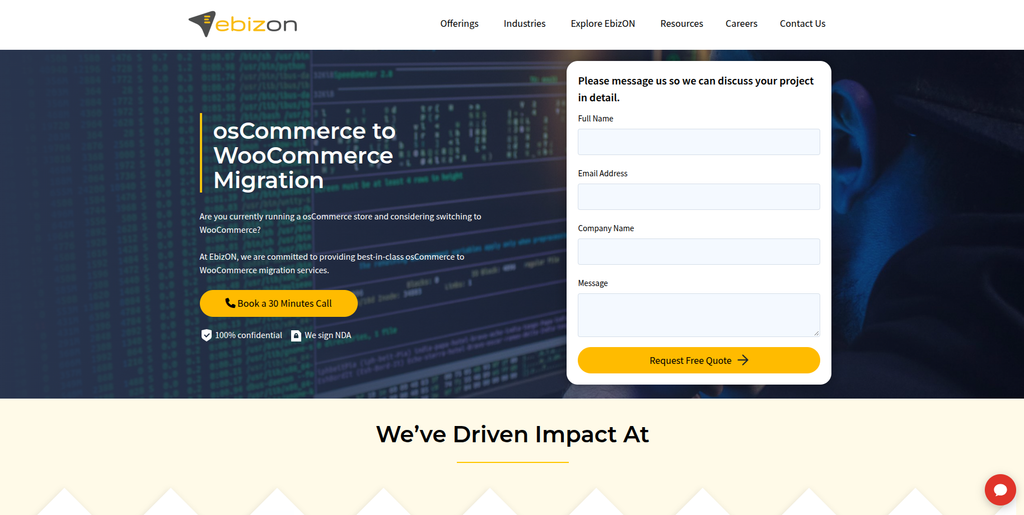
EbizON is the most directly aligned company on this list for businesses planning an osCommerce to WooCommerce migration.
Its dedicated migration service focuses on transferring important ecommerce information while moving the existing store into a WooCommerce environment. This includes reviewing the source store, planning the migration, transferring relevant data, configuring the new store, and testing the migrated website.
For an established osCommerce business, the migration may involve products, categories, customers, orders, images, reviews, coupons, manufacturers, and other store information. The exact scope depends on the existing database and the functionality used by the business.
Businesses planning this platform transition can review EbizON’s osCommerce to WooCommerce Migration service to understand its dedicated offering.
EbizON also works on broader ecommerce requirements, including WooCommerce development, custom functionality, integrations, API development, and website optimization. These capabilities can be useful when the migration involves rebuilding existing store features or connecting WooCommerce with other business systems.
Key capabilities:
- osCommerce to WooCommerce Migration
- Ecommerce data migration
- Product and category migration
- Customer data migration
- Order history migration
- SEO migration
- URL redirects
- WooCommerce development
- Custom functionality
- API integrations
- Plugin development
- Ecommerce optimization
- Post-migration support
2. CMSTOWP
CMSTOWP is a WordPress and website migration company focused on platform migration, WooCommerce development, content migration, and SEO-focused website replatforming.
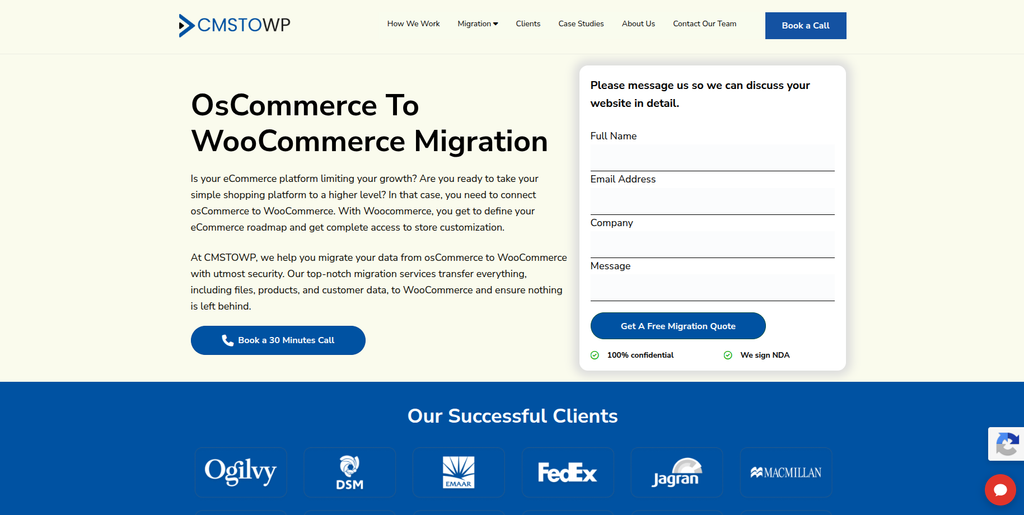
CMSTOWP is another relevant option for businesses moving an osCommerce store into WooCommerce.
Its focus on WordPress migration and website replatforming can be useful for projects that involve more than transferring ecommerce records. A migration may also require rebuilding website pages, organizing content, transferring media, recreating navigation, and adapting the existing website structure to WordPress.
For an osCommerce store, the project should include a detailed review of product information, customer records, order history, categories, URLs, and custom functionality.
Businesses can review CMSTOWP’s osCommerce to WooCommerce Migration service when evaluating its dedicated migration offering.
CMSTOWP can also be considered for WordPress development, WooCommerce implementation, content migration, asset migration, SEO migration, and website restructuring.
Key capabilities:
- osCommerce to WooCommerce Migration
- WordPress migration
- WooCommerce migration
- Ecommerce website migration
- Content migration
- Asset migration
- SEO migration
- 301 redirects
- Taxonomy migration
- Website replatforming
- WooCommerce development
3. Viganium
Viganium is a software solutions and artificial intelligence company offering custom software development, digital solutions, and technology consulting.
Viganium focuses on developing technology solutions around business requirements. Its services include custom software, web and mobile application development, AI solutions, and digital transformation.
These capabilities may be relevant to an osCommerce migration project when the business needs more than a standard store transfer. For example, an ecommerce website may rely on custom workflows, internal systems, or integrations that need to be reviewed before moving to WooCommerce.
A business considering Viganium should define the required ecommerce functionality, database migration scope, and integration needs before beginning the project.
Key capabilities:
- Custom software development
- Web application development
- Mobile application development
- AI and machine learning solutions
- Digital transformation
- Technology consulting
- Custom business systems
- Software development
4. Netish Technologies
Netish Technologies is a digital content and technology company specializing in e-learning solutions, interactive content, animation, and creative technology services.
Netish Technologies works with organizations on digital learning products and content development. Its services include interactive videos, animation, illustrations, course development, localization, and conversion of legacy learning content into digital formats.
Although its published service focus is not centered on ecommerce migration, its experience with digital content and content conversion may be relevant to projects involving the preparation or transformation of existing digital materials.
Businesses looking for a complete osCommerce to WooCommerce migration should assess the company’s ecommerce development capabilities separately from its content and e-learning services.
Key capabilities:
- Digital content development
- E-learning solutions
- Interactive videos
- Animation
- Technical illustrations
- Content conversion
- Localization
- Learning management system customization
5. Notionmind
Notionmind is a technology company focused on AI systems, enterprise platforms, workflow automation, business intelligence, and digital product development.
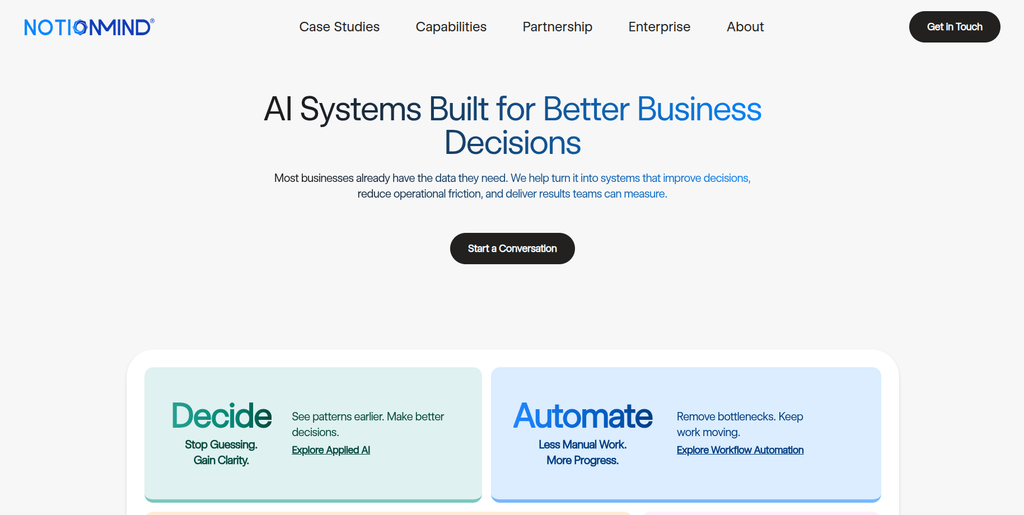
Notionmind works with businesses that need technology solutions for operational challenges, disconnected systems, and complex business processes.
Its enterprise platform and product development capabilities may be relevant when an ecommerce migration involves wider business systems rather than only the online storefront.
For example, a business may need to review how its ecommerce platform connects with inventory management, reporting, customer information, or internal workflows before moving to WooCommerce.
These requirements should be discussed during the initial project assessment to determine whether the company’s technical services match the migration scope.
Key capabilities:
- Enterprise platform development
- Workflow automation
- Business intelligence
- AI systems
- Product development
- Custom software solutions
- System modernization
- Data and technology solutions
6. 5D Solutions
5D Solutions is a digital transformation and technology company providing web development, ecommerce solutions, application development, and system integration services.
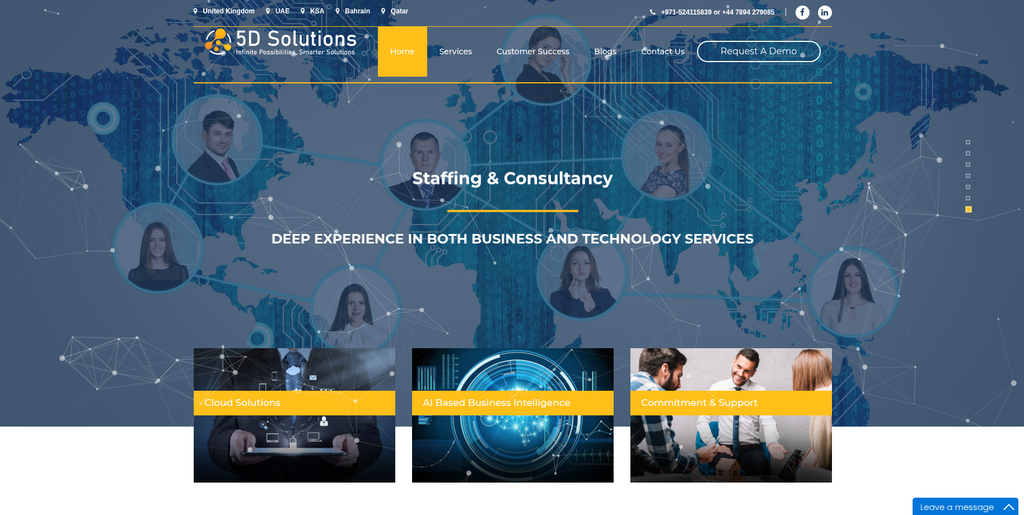
Its web development services include ecommerce websites, web applications, API development, CMS solutions, and integrations. The company also works with technologies such as React, Next.js, Node.js, .NET, PHP, and database platforms.
These capabilities can be useful for businesses whose osCommerce stores have custom functionality or connections with external systems.
During a migration project, businesses should discuss how existing product and customer data will be transferred, how custom features will be recreated, and how the new WooCommerce store will connect with other business applications.
Key capabilities:
- Ecommerce development
- Web application development
- CMS solutions
- API development
- System integrations
- Custom software
- Database solutions
- Digital transformation
7. Cozmiq
Cozmiq is a web development and digital experience company offering Shopify, WordPress, Webflow, full-stack development, and UI/UX services.
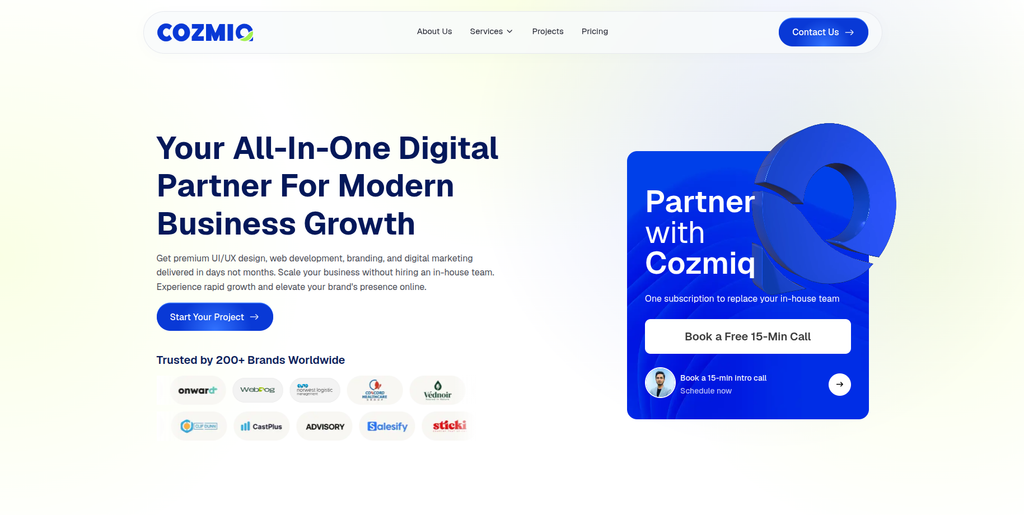
Cozmiq works on website development projects that combine design, functionality, and technical implementation. Its services include WordPress development, Shopify development, full-stack development, and web applications.
For an osCommerce business planning a WooCommerce migration, its WordPress and web development capabilities may be relevant when the project includes a new website structure, updated design, or custom functionality.
A migration assessment should establish the required WooCommerce implementation work, product data structure, third-party integrations, and SEO requirements before the project begins.
Key capabilities:
- WordPress development
- Shopify development
- Web development
- Full-stack development
- UI/UX design
- Web applications
- Theme customization
- Third-party integrations
8. TechTIQ Solutions
TechTIQ Solutions is a software development company offering ecommerce website development, custom software, web applications, digital transformation, and quality assurance services.
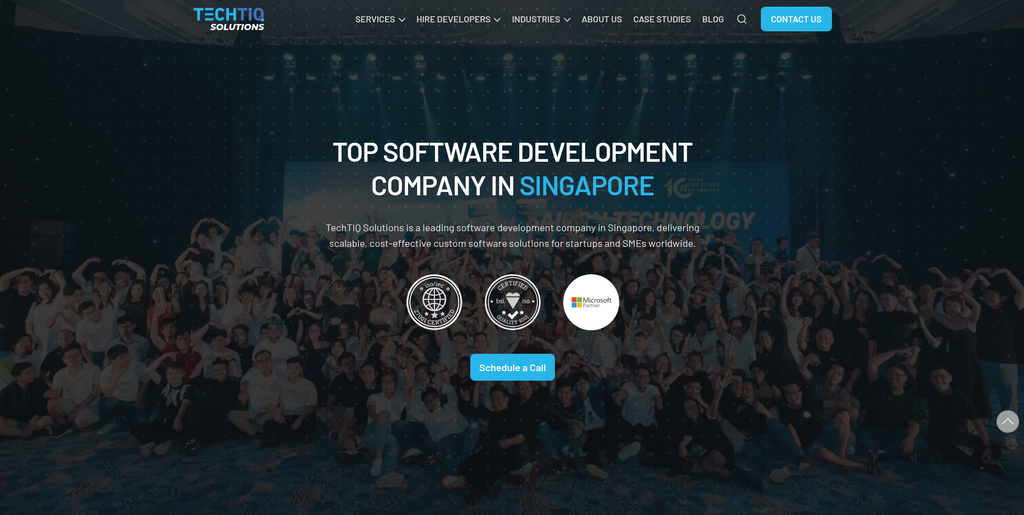
TechTIQ Solutions works across software development, ecommerce and retail applications, web development, and testing. Its services also include custom software, order management systems, product information management systems, and software maintenance.
These capabilities can be relevant for osCommerce businesses with more complex operational requirements.
For example, a store may need to connect WooCommerce with inventory systems, order management tools, or other business applications. Such requirements should be identified before the migration so that the new store can support the existing business processes.
Key capabilities:
- Ecommerce website development
- Custom software development
- Web application development
- Order management systems
- Product information management
- API integrations
- Software testing and QA
- Digital transformation
- Technical support
9. Aumcore
Aumcore is a digital marketing and ecommerce development agency offering ecommerce design, development, platform upgrades, integrations, and optimization services.

Aumcore provides ecommerce services that cover planning, installation, configuration, template design, content population, user experience, SEO optimization, testing, launch, monitoring, and maintenance.
Its ecommerce technology experience includes platforms such as Shopify, Magento, WordPress, and Salesforce Commerce Cloud. The company also lists upgrade and migration, custom module development, API development, and integration services among its capabilities.
These services make Aumcore a relevant option for businesses looking for a combination of ecommerce development, user experience improvements, and platform-related technical work.
Key capabilities:
- Ecommerce design and development
- Platform upgrades and migration
- WordPress and WooCommerce solutions
- Custom module development
- API development
- System integrations
- UX design
- SEO optimization
- Performance optimization
- Ecommerce maintenance
10. Three Sixty Plus
Three Sixty Plus is a web design and ecommerce development studio offering online store development, platform migration, website redesign, and ongoing support.
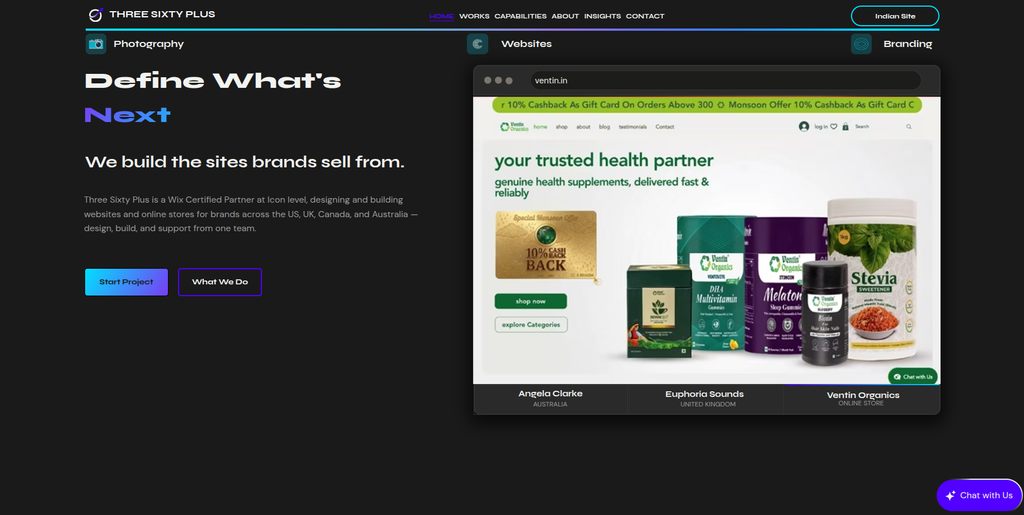
Three Sixty Plus works with ecommerce platforms including Shopify and WooCommerce. Its ecommerce services cover catalogue setup, payment gateways, multi-currency checkout, integrations, store development, and platform migration.
The company also describes migration work involving products, categories, and URLs. This can be relevant for businesses moving an existing ecommerce store to a new platform and looking to retain important store structures.
For an osCommerce migration, businesses should discuss the full data requirements, including customers, historical orders, product options, images, and custom functionality, before finalizing the project scope.
Key capabilities:
- Ecommerce website development
- WooCommerce development
- Shopify development
- Platform migration
- Product catalogue setup
- Payment gateway integration
- Multi-currency checkout
- Website redesign
- SEO structure
- Ongoing support
How to Choose the Right osCommerce to WooCommerce Migration Company
Selecting the right migration partner requires more than checking whether a company offers WooCommerce development. Businesses should review the provider’s technical capabilities, migration process, and understanding of the existing store.
1. Check Experience With Both Platforms
Ask whether the company understands the osCommerce database structure and WooCommerce requirements.
The provider should be able to explain how it will handle:
- osCommerce products
- Product categories
- Product attributes and options
- Customer records
- Historical orders
- Images and media
- Existing URLs
- Custom store functionality
Experience with both platforms can help reduce problems during data mapping and development.
2. Review the Data Migration Process
Ask the company to prepare a migration plan that identifies all required data.
The plan should cover:
- Product information
- Categories
- Product variations
- Customer details
- Order history
- Reviews
- Coupons
- Manufacturers
- Inventory
- Tax settings
- Custom fields
The migration team should also explain how it will validate the data after transfer.
3. Understand Custom Functionality Requirements
Older osCommerce stores may use custom code, modules, or features that do not have direct WooCommerce equivalents.
Each feature should be reviewed to determine whether it will be:
- Recreated through WooCommerce development
- Replaced with a plugin
- Connected through an API
- Updated as part of the redesign
- Removed because it is no longer required
This assessment can help businesses understand the actual development work before migration starts.
4. Evaluate SEO Migration Experience
The provider should have a clear plan for preserving important search engine information.
Ask how it will handle:
- Existing URLs
- New WooCommerce URLs
- 301 redirects
- Meta titles
- Meta descriptions
- Canonical tags
- Internal links
- Structured data
- XML sitemap
- Robots.txt
- Search Console monitoring
5. Review WooCommerce Development Skills
The migration partner should be able to configure and customize the new WooCommerce store.
Depending on the project, this may include:
- WooCommerce theme development
- Custom product templates
- Category page customization
- Product filters
- Search functionality
- Payment gateways
- Shipping integrations
- Custom checkout
- API integrations
- Plugin development
6. Ask About Testing and Quality Checks
Before launch, the new store should be tested across different devices and important customer journeys.
Testing should cover:
- Product pages
- Categories
- Product options
- Search and filters
- Cart
- Checkout
- Payments
- Shipping
- Taxes
- Customer accounts
- Discounts
- Order processing
- Third-party integrations
- Mobile responsiveness
- Redirects
7. Consider Post-Migration Support
The migration partner should also be able to help after the new store goes live.
Post-migration support may include:
- Technical troubleshooting
- Plugin configuration
- Performance improvements
- SEO monitoring
- Analytics verification
- Integration support
- WooCommerce maintenance
- Security updates
- Feature development
Benefits of Moving From osCommerce to WooCommerce
WordPress Integration
WooCommerce operates within WordPress, allowing businesses to manage their online store and website content in one environment.
This can be useful for companies that regularly publish blogs, landing pages, product guides, and other content alongside their ecommerce catalogue.
Greater Store Customization
WooCommerce supports themes, plugins, extensions, and custom development. Businesses can adapt product pages, checkout processes, navigation, and other store elements according to their requirements.
Flexible Ecommerce Extensions
Businesses can add functionality through WooCommerce extensions and WordPress plugins.
Depending on the requirements, these may support:
- Payment methods
- Shipping options
- Product filters
- Customer reviews
- Discounts
- Subscriptions
- Marketing integrations
- Inventory management
Content and Ecommerce Management
With WooCommerce and WordPress, businesses can manage products and website content through the same platform.
This can simplify the management of ecommerce pages, blogs, resources, and landing pages.
Custom Integrations
WooCommerce can be connected with external business systems through plugins, APIs, and custom development.
Common integration requirements include:
- CRM platforms
- ERP systems
- Inventory management
- Accounting software
- Payment gateways
- Shipping platforms
- Email marketing tools
- Analytics systems
Opportunity to Improve the Existing Store
Migration provides an opportunity to review the current website and improve areas that may have become outdated.
Businesses can work on:
- Product organization
- Website navigation
- Mobile usability
- Product page layouts
- Checkout experience
- Website performance
- SEO structure
- Internal linking
- Analytics
- Customer experience
osCommerce to WooCommerce Migration Checklist
Before Migration
- Audit the existing osCommerce store
- Back up the website and database
- Export product information
- Export customer records
- Review historical orders
- Record product categories
- Document existing URLs
- Identify custom modules
- Identify third-party integrations
- Record current SEO information
- Review the existing store design
Migration Planning
- Define the WooCommerce store structure
- Map osCommerce data to WooCommerce
- Plan product categories
- Review product attributes and options
- Identify required plugins
- Identify custom development needs
- Prepare URL mapping
- Create the redirect plan
- Plan SEO migration
- Define testing requirements
- Set launch requirements
WooCommerce Development
- Set up WordPress
- Install WooCommerce
- Select or develop the theme
- Configure product templates
- Create product categories
- Configure product attributes
- Set up payment gateways
- Configure shipping
- Configure taxes
- Set up customer accounts
- Add required plugins
- Develop custom functionality
Data Migration
- Transfer products
- Transfer product images
- Transfer categories
- Transfer product attributes
- Transfer product options
- Transfer customers
- Transfer historical orders where required
- Transfer reviews where applicable
- Transfer coupon information
- Transfer manufacturer information where required
- Validate inventory
- Check customer and order relationships
SEO Migration
- Crawl the existing website
- Prepare an old-to-new URL map
- Implement 301 redirects
- Transfer page titles
- Transfer meta descriptions
- Review heading structure
- Check canonical URLs
- Review internal links
- Generate the XML sitemap
- Review robots.txt
- Verify Search Console
- Monitor indexation
Testing
- Test product pages
- Test product categories
- Test product options
- Test search
- Test filters
- Test cart
- Test checkout
- Test payment methods
- Test shipping
- Test taxes
- Test customer accounts
- Test coupon codes
- Test order processing
- Test integrations
- Test mobile responsiveness
- Test redirects
- Verify analytics
Launch
- Complete the final backup
- Perform final data synchronization
- Verify the production environment
- Check SSL
- Test important website URLs
- Verify redirects
- Check payment and shipping
- Verify analytics
- Verify Search Console
- Submit the sitemap
- Monitor organic traffic
- Check crawl errors
- Review store transactions
Frequently Asked Questions
What is osCommerce to WooCommerce Migration?
osCommerce to WooCommerce Migration is the process of moving an online store from osCommerce to WooCommerce. It may involve transferring products, categories, customers, orders, images, reviews, coupons, content, and other store information.
Can osCommerce products be migrated to WooCommerce?
Yes. Product information such as names, descriptions, SKUs, prices, images, categories, attributes, and product options can be transferred. The exact process depends on the existing database structure and the data used by the store.
Can customer information be transferred?
Customer information can be migrated when the required records are available and can be mapped correctly to WooCommerce. The migration team should also review customer account information and address fields.
Can historical osCommerce orders be migrated?
Historical orders can potentially be transferred depending on the available source data and the requirements of the new store. Businesses should define which order details need to be retained before migration begins.
Will my osCommerce website URLs change?
Some URLs may change because osCommerce and WooCommerce use different URL structures. Existing URLs should be mapped to their relevant new pages, and 301 redirects should be implemented where required.
Will osCommerce to WooCommerce Migration affect SEO?
It can affect organic search performance if URLs, redirects, metadata, content, or internal links are not handled correctly. A proper SEO migration plan can help preserve existing search value and reduce avoidable ranking issues.
Can I keep my existing osCommerce website design?
The existing design can often be recreated or adapted using a WooCommerce theme and custom development. However, some older design elements or platform-specific features may need to be updated.
What happens to osCommerce modules?
Each module should be reviewed separately. Some features may have equivalent WooCommerce plugins, while others may require custom development or API integrations.
Can payment and shipping settings be transferred?
Payment and shipping functionality can generally be configured again in WooCommerce using compatible plugins, gateways, integrations, or custom development. The exact setup depends on the services currently used by the business.
How long does an osCommerce to WooCommerce Migration take?
The timeline depends on the size and complexity of the existing store. Product volume, customer and order records, custom modules, integrations, design requirements, SEO work, and testing can all affect the project duration.
Should I redesign my store during migration?
A redesign is not compulsory. However, migration can be a good opportunity to improve product pages, navigation, mobile usability, checkout, website performance, and the overall shopping experience.
What should be tested before launching the new WooCommerce store?
Businesses should test products, categories, product options, search, filters, cart, checkout, payments, shipping, taxes, customer accounts, discounts, orders, integrations, redirects, mobile layouts, and analytics before launch.
Conclusion
An osCommerce to WooCommerce Migration gives businesses an opportunity to move their ecommerce operations into a flexible WordPress-based environment. It can also provide a chance to improve website design, product organization, store functionality, SEO, and the overall customer experience.
The migration should not be treated as a simple database transfer. It needs to cover products, categories, customers, orders, images, reviews, coupons, content, custom modules, URLs, SEO, integrations, payments, shipping, and testing.
Among the companies reviewed, EbizON is the most directly aligned option for this specific migration requirement, with a dedicated osCommerce to WooCommerce migration service. CMSTOWP is another relevant choice for businesses looking for WordPress migration, WooCommerce development, content migration, and SEO-focused website replatforming.
The other companies offer different combinations of ecommerce development, software development, web applications, integrations, digital transformation, and website services. Their suitability will depend on the technical requirements of the existing store and the migration work involved.
The right migration partner should provide a clear plan for data mapping, WooCommerce development, SEO preservation, URL redirects, custom functionality, integrations, testing, launch, and post-migration support. With proper planning, businesses can move from osCommerce to WooCommerce while protecting important store information and preparing their ecommerce website for future growth.