

Seamless Migration of 9 Regional News Websites from Drupal 7 to Drupal 10 for AMGCI
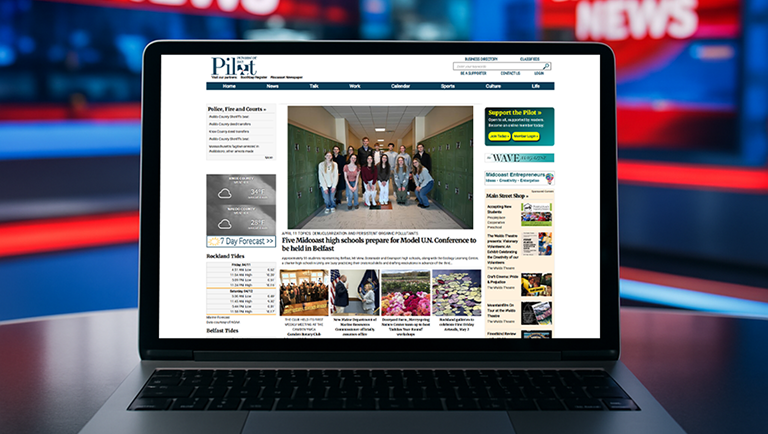
PenBay Pilot is a local news platform serving Midcoast Maine, offering real-time updates on news, events, and community stories. It keeps residents informed and engaged with a strong focus on local journalism.
Industry
Digital Publishing & Local News Media
Technology
Drupal 10, PHP 8, Symfony 5, CKEditor 5
Services
Drupal 7 to 10 Migration, Website Development, SEO Preservation, Website Security, Project Management, Content Migration, Performance Optimization
Project Overview
AMGCI is a media group managing a network of nine popular regional news websites across three key clusters:
- Maine-OK Enterprises: Boothbay Register, Wiscasset Newspaper, PenBay Pilot
- BeaverDam Cluster: The Week Today, Dartmouth Week, Sippican Week
- Cape Gazette
These websites were originally built on Drupal 7, which is approaching its official end-of-life. These factors raised critical concerns around security, performance, and maintainability.
AMGCI aimed to proactively upgrade all their websites to Drupal 10, ensuring long-term platform sustainability, improved user and developer experience, and robust security.
To achieve this, AMGCI partnered with EbizON, a leading digital transformation and web development agency with deep expertise in Drupal migrations and complex multi-site projects.
Project Objectives
- Upgrade nine websites from Drupal 7 to Drupal 10 for security and sustainability.
- Preserve SEO and traffic with seamless URL redirection and metadata migration.
- Boost editorial workflows with modern tools like the TinyMCE Rich Text Editor and a new page builder.
- Enhance security and performance to future-proof the digital experience.
- Ensure zero downtime and provide ongoing support to editorial teams.
Project Execution
1. Design and Discovery Process
EbizON initiated the project with a detailed discovery phase to understand the unique architecture, editorial workflows, and functionality of each Drupal 7 website. Key steps included:
- Conducting stakeholder interviews and requirement-gathering sessions.
- Reviewing existing design elements and information architecture.
- Identifying technical gaps, usability issues, and performance bottlenecks.
- Defining migration strategy, timelines, and deliverables through collaborative planning.
2. Development and Customization
Each site was rebuilt on a fresh Drupal 10 installation with:
- Custom theme development aligned with the branding of each publication.
- Enhanced mobile responsiveness, accessibility (WCAG compliance), and cross-device UI consistency.
- Integration of a modern page builder for flexible and intuitive content management.
- Development of custom modules to replicate essential features from Drupal 7.
3. Custom Drupal 10 Theme Development
We created a custom Drupal 10 theme tailored to the brand identity of each publication. EbizON prioritized clean, modern design, mobile responsiveness, and WCAG-compliant accessibility while introducing a consistent visual experience across all properties. Editorial teams also gained access to a powerful new drag-and-drop page builder, streamlining content creation.
Key technical aspects of our theme development included:
- Twig Templating: Page and element rendering was handled through Drupal’s Twig templating system, using clean markup and
.html.twigtemplates. Preprocess functions were used to pass dynamic data and control logic at the theme level. - Library Management: CSS and JavaScript assets were defined and managed through
.libraries.ymlfiles. We utilized deferred and lazy loading techniques for performance optimization and reduced initial page load times. - WCAG-Compliant Accessibility: The themes were built to comply with WCAG 2.1 AA standards, ensuring content is usable by all audiences, including keyboard navigation, screen reader support, and accessible form controls.
- Mobile-First and Responsive Design: The front end was built using a mobile-first approach, ensuring responsiveness across all breakpoints. Special attention was given to ad units, navigation behavior, and content readability on all devices.
- Admin UX Enhancements: The backend editing experience was improved through custom view modes, clear field labeling, and tailored widget displays—helping editors preview content more effectively during creation.
- Layout Builder Usage: While Layout Builder was enabled to define consistent layouts for content types, it was primarily used by developers and site builders to maintain a structured layout system. Editors worked within predefined field and paragraph structures, ensuring simplicity and design consistency.
- This theming approach ensured a clean, accessible, and performance-optimized design while keeping the editorial experience streamlined and intuitive.
4. Custom Module Development
We developed more than 40 custom modules to fulfill the unique functional and editorial workflows across AMGCI’s network of sites. Each module was designed to encapsulate a specific set of responsibilities—ranging from content curation and ad management to third-party integrations and API handling. This modular approach not only improved code readability and maintainability but also ensured greater flexibility for future enhancements and workflow customizations.
In contrast to the Drupal 7 implementation—where much of the business logic was written directly within a single .module file—our Drupal 10 architecture leveraged modern best practices by fully utilizing:
- Drupal’s Service Container: Business logic was decoupled into injectable services (
MyCustomService::class) for better testability, reusability, and adherence to the Single Responsibility Principle. - Plugin API: Custom plugins were implemented for Blocks, Field Formatters, Views handlers, Condition plugins, and Queue Workers—enabling extensible, discoverable functionality across features like advertising logic and print workflows.
- Plugin API: Custom plugins were implemented for Blocks, Field Formatters, Views handlers, Condition plugins, and Queue Workers—enabling extensible, discoverable functionality across features like advertising logic and print workflows.
- Custom Forms & Form Alters: Form workflows for subscriptions, classifieds, and login were implemented using Form API best practices, including custom validation and AJAX behaviors. For forms involving long-running operations or large datasets, we implemented Drupal’s Batch API to offload processing from the browser and ensure a smoother user experience.
- Routing and Controllers: Instead of using
hook_menu, we created route definitions (*.routing.yml) and linked them with custom Controller classes for delivering both HTML and JSON responses. - Cron Jobs: Repetitive and scheduled tasks—like newsletter compilation or syncing Adobe InDesign content—were handled using Drupal’s cron system and the Queue API where applicable.
- By embracing these Drupal 10 standards, the resulting architecture is clean, scalable, and aligned with modern object-oriented programming principles—ensuring AMGCI can continue evolving their platform with ease.
4. Data Migration
A critical part of the upgrade was the successful migration of data from Drupal 7 to Drupal 10. Given the large volume of editorial content, media files, taxonomy terms, users, and URL aliases across multiple sites, EbizON implemented a robust migration strategy using Drupal’s Migrate API framework—tailored for accuracy, flexibility, and minimal downtime.
Migration Framework
We utilized the core Migrate, Migrate Plus, and Migrate Tools modules to define and execute migrations. The process was divided into the following stages:
- Content Types and Nodes: Articles, pages, and custom content types were migrated with full field-level mapping. We preserved original node IDs where applicable to maintain cross-references.
- Taxonomy Terms: Hierarchical vocabularies such as Topics, Regions, and Tags were carefully migrated and re-linked with nodes.
- Media Files: Image and document files were migrated from legacy file structures into Drupal 10’s Media Entity system. File paths were validated, and broken links were reported for cleanup.
- Users and Roles: All users, roles, and permissions were migrated to preserve editorial team access.
- URL Aliases: SEO-friendly paths were migrated using the
migrate_path_aliasplugin, with 301 redirects applied for deprecated or restructured URLs.
Custom Migrations
Custom migration plugins and process callbacks were written to handle:
- Legacy fields without 1:1 mapping (e.g., serialized data, field collections).
- Date formatting inconsistencies across time zones.
- Multi-valued fields and referenced entities.
Migration Rollout
- Incremental Migrations: We ran staged test migrations in dev and staging environments before go-live, enabling thorough QA without affecting production.
- Validation and Cleanup: Post-migration QA ensured all entities, aliases, and fields matched their Drupal 7 counterparts.
- Rollback and Re-run Support: Each migration supported rollback, allowing fixes and updates without duplication or corruption.
5. Content Architecture Modernization
As part of the Drupal 10 upgrade, significant improvements were made to the content architecture to align with modern practices and improve long-term maintainability.
Field Collections → Paragraphs
- Replaced rigid Field Collections with Paragraphs for flexible, nestable components (e.g., callouts, galleries, videos).
- Editors gained intuitive tools for building content-rich pages.
- Paragraphs supported component-based design and integration with Layout Builder.
Panels → Layout Builder
- Replaced Panels with native Layout Builder for visual layout customization.
- Editors can manage per-node layout overrides, blocks, and fields with drag-and-drop ease—no code required.
- Seamless integration with Paragraphs and Blocks ensured reusable, scalable designs.
OG Groups → Group Module
- Replaced Organic Groups with the modern Group module for entity-based content access and segmentation.
- Enabled creation of group-specific content types and role-based permissions.
- Supported robust group-aware workflows.
Structured & Scalable Design
All decisions prioritized:
- Reusability of components.
- Scalability for future growth.
- Editorial usability for non-technical users.
6. Thorough Testing and Quality Assurance
- Conducted responsive testing across major browsers and screen sizes.
- Validated functionality of custom workflows, forms, and content types.
- Addressed bugs and issues in real-time with a 24-hour SLA.
- Performed accessibility and performance testing using automated tools and manual audits.
7. URL Redirection and SEO Preservation
- Maintained legacy URL structures wherever possible to protect organic traffic.
- Implemented 301 redirects for updated or deprecated URLs.
- Preserved all on-page SEO elements such as meta titles, descriptions, and alt attributes.
- Integrated SEO optimization modules for long-term discoverability.
8. Launch and Ongoing Support
- Successfully deployed the first cluster of sites with zero downtime and full data integrity.
- Provided CMS training and documentation for internal teams.
- Implemented SSL, TinyMCE Rich Text Editor, and role-based access control for enhanced security.
- Continued post-launch monitoring and technical support for platform stability.
Results & Feedback
1. Upgraded Platform Across All 9 Websites
All websites were successfully migrated to Drupal 10, offering a modern, future-ready digital foundation with ongoing support for the next several years.
2. Enhanced Security Posture
AMGCI now benefits from robust security features built into Drupal 10, significantly reducing exposure to vulnerabilities like XSS, SQL injection, and outdated editor tools.
3. Improved Performance and Editorial Efficiency
- Faster page load times and enhanced scalability
- Streamlined content creation with CKEditor 5 and the new page builder
- Better collaboration and moderation features for editorial teams
4. Strong SEO Continuity
All SEO benchmarks were preserved, ensuring consistent organic traffic and visibility across all news websites post-migration.
5. Positive Client Feedback
AMGCI expressed high satisfaction with the professionalism, structured approach, and responsiveness of the EbizON team. The migration was delivered on time and on budget, with zero disruption to readers and minimal editorial downtime.

Client’s Feedback
“Working with EbizON Digital has been a highly satisfying experience. Their team is extremely methodical in their project management approach, consistently using tools and metrics to keep everything on track. We’ve seen steady progress throughout the engagement, and their commitment to structure and accountability really stands out. Communication has been seamless — whether through virtual meetings, emails, or direct messages, they ensure we’re always in the loop.”
Am Gee
CEO, AmgeePUB
What Our Customers Says


reviewed by JOE WILLIAMS
Senior manager, Remedy Liqour
Head of Business Engagement, WRI
“Ebizon is one of the best in the business and they back this up with their quick and friendly support. The team is relentless to listen to our issues and come up with a solution. Have seen the team stretch beyond their knowledge to help us.”

reviewed by JOSEPH CURLEY
Vice President, Sokolin
Content Officer, Society for Science & Public
“My experience with this partnership has been positive. The support Ebizon extended towards us was commendable. It perfectly fulfils our requirements with their support we had no hassle.”

reviewed by Beat Walder
Manager, Forester Beauty
Chief of Staff, Strategic Dentistry
“I’m the owner of Forester Beauty in Switzerland. I’ve contacted Dee and he led me through the whole process of migrating our online shop to Shopify, including custom elements to enhance user experience. The whole Project Team at Ebizon has a very professional attitude and provide their support and insights promptly.”

reviewed by Wilma Pretorius
Managing Director, Cranimals
For fully managed WordPress installs, WPEngine is my Go-To
“The Team worked well with my company to migrate our Magento store to a new Shopify store. Ebizon was able to implement required applications to enable a near seamless transition. Thanks Team!

reviewed by Raul
Senior Manager, Emporium Embroidery
Head of Business Engagement, WRI
“Emporium Embroidery – customization module / Magento upgrade Thank you Ebizon and a great thank you to the team who was always very helpful on this journey.”

reviewed by Alexandre Salem
eCommerce Manager, Ada Cosmetic
Chief of Staff, Strategic Dentistry
“Thanks to EbizON solution, the platform enabled the company to sell products efficiently. The team worked in sprints and held weekly meetings, ensuring accurate outcomes.”

reviewed by Po Ming Lam
Manager, Avec Plaisirs Chefs Traiteurs
For fully managed WordPress installs, WPEngine is my Go-To
“Ebizon is helping our Magento development needs. Their customer oriented approach has made our experience very pleasant and efficient. We are definitely sending more work to them and recommend others to try them out!”