

Goberco AI Product Schema & Shopify SEO Enhancement
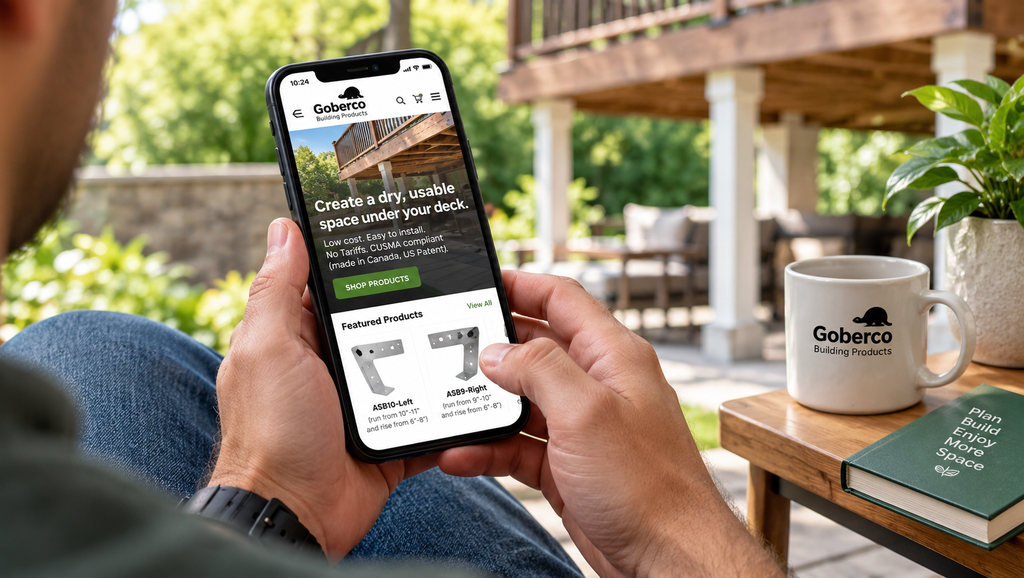
Goberco is a Canadian building-materials company offering specialized products including under-deck drainage systems, stair brackets, waterproofing solutions, and related construction products. The project focused on strengthening Goberco’s Shopify store from both a traditional SEO and emerging AI-discovery perspective.
Industry
Building Materials & Construction Products
Technology
Shopify
Services
Technical SEO, Shopify SEO Remediation, AI Product Schema, Structured Data Optimization, AI Search Visibility, Content Optimization
Project Overview
Goberco partnered with EbizON to strengthen its Shopify store through technical SEO improvements, enhanced product schema, and AI-focused search optimization. The strategy aimed to improve organic visibility, rich-result eligibility, and product discoverability across Google and AI platforms.

Project Objectives
The primary objectives were to:
- Identify and resolve critical technical and on-page SEO issues across the Shopify store.
- Improve metadata, headings, content depth, redirects, and crawlability.
- Strengthen product and category visibility in organic search.
- Implement richer product schema beyond Shopify’s standard structured data.
- Improve eligibility for Google rich results.
- Help AI platforms understand Goberco’s products, categories, brand, pricing, availability, reviews, shipping, and return information.
- Establish stronger connections between products, the Goberco brand, and organization-level entities.
- Build a scalable SEO foundation that can evolve as products and content are added.
Project Execution
1. Design & Discovery Process
The project began with an extensive crawl and technical SEO assessment of Goberco.com.
A Screaming Frog crawl conducted on July 3, 2026 analyzed 223 resources and 44 HTML pages. While the Shopify store demonstrated a fast average server response time of approximately 0.35 seconds and clean canonical implementation, the assessment identified substantial opportunities across on-page SEO, content, metadata, and technical configuration.
Key Findings
The initial audit identified:
- 18 of 44 pages missing an H1 tag.
- 15 pages without meta descriptions.
- 10 product pages sharing identical meta descriptions.
- 6 title tags exceeding 60 characters.
- 27 of 44 pages containing fewer than 300 words.
- Four of five collection pages missing meta descriptions.
- A duplicate collection page remaining live and indexed.
- Temporary redirects requiring review.
- A broken Judge.me JavaScript asset potentially affecting review functionality.
These findings formed the foundation for the SEO remediation and AI visibility strategy.
2. Development & Customization
The implementation strategy combined Shopify-specific SEO remediation with automation to address issues systematically across the website.
Automated SEO Remediation
The workflow was designed to:
- Identify missing metadata, H1s, schema issues, broken links, and duplicate content.
- Generate optimized meta titles and descriptions.
- Add missing H1 headings based on page topics and target keywords.
- Improve image alt text.
- Strengthen thin content on important pages.
- Improve internal linking and crawlability.
- Resolve duplicate URLs and redirect issues.
- Configure and deploy structured-data templates.
Metadata Optimization
Priority was given to the pages with the greatest identified gaps, including collection and product pages.
The proposed remediation included generating unique descriptions for pages with missing or duplicated metadata, shortening over-length title tags, adding relevant H1s, consolidating the duplicate stair-angle collection, and expanding strategically important thin-content pages.
3. Key SEO & AI Visibility Enhancements
Enhanced Product Schema
A major part of the project focused on moving beyond basic Shopify structured data.
The proposed enhanced schema incorporates richer information such as:
- Product category and product type
- Ratings and aggregate reviews
- Shipping information
- Return information
- Structured offers
- Pricing
- Availability
This gives search engines and AI systems more explicit information about what Goberco sells and how individual products relate to the overall business.
AI Entity Linking
Product, brand, and organization entities were structured to create clearer relationships between Goberco and its catalog.
This approach was designed to help AI systems correctly associate products and product information with Goberco rather than treating individual website pages as isolated pieces of information.
Dynamic Product Accuracy
The schema strategy was designed to synchronize dynamic information such as product price and availability, reducing the possibility of outdated information being presented by systems consuming the structured data.
AI Search Visibility
The structured-data strategy considered not only traditional Google search but also AI-driven discovery environments including:
- ChatGPT
- Google Gemini
- Google AI experiences
- Microsoft Copilot
- Perplexity
- Voice assistants
The underlying objective was to make product information structured, connected, and machine-readable enough for AI systems to better understand Goberco’s catalog.
4. Testing & Deployment
The proposed execution followed a compressed 10-working-day / 1.5-week workflow, divided into three stages.
Days 1–3: Audit & Generate
- Scan website URLs.
- Identify missing meta tags, H1s, and alt tags.
- Generate optimized page-level SEO content.
- Configure structured-data templates.
Days 4–8: Deploy & Inject
- Deploy generated metadata into Shopify.
- Add optimized image alt attributes.
- Publish homepage SEO content.
- Add category introduction content.
- Implement schema improvements.
Days 9–10: QA & Verify
- Re-crawl the website.
- Validate whether identified SEO issues have been addressed.
- Resubmit relevant information through Google Search Console.
- Test structured data and rich-result eligibility.
- Produce the final audit report.
This approach was intended to automate repetitive SEO tasks while retaining a defined QA and validation stage before completion.
5. Launch Results & Feedback
Because the supplied Goberco document is a proposal and remediation plan, rather than a post-launch performance report, it does not provide verified post-launch traffic, ranking, conversion, or AI-visibility results. The outcomes below therefore represent the targeted business impact, not measured results.
Targeted SEO Impact
The initial technical SEO score was documented as 52, with the remediation plan setting a 75+ post-remediation target.
Results & Feedback
The planned improvements were intended to contribute to:
- Better organic search visibility.
- Greater eligibility for Google rich results.
- Higher click-through opportunities.
- More consistent SEO implementation across the Shopify store.
- Reduced manual SEO effort.
- A stronger long-term technical SEO foundation.
Targeted AI Visibility Impact
The enhanced product schema was designed to make it easier for AI systems to understand:
What the product is → Which category it belongs to → Who the brand is → Price and availability → Reviews → Shipping and returns.
The proposal’s before-and-after examples on pages 19–20 also illustrate the intended shift from limited search-result context toward richer FAQ and product information supported by structured data.
Client’s Feedback
“This team did a great job to transfer and re-design our website on shopify. They are professional, listen our needs and propose/deliver optimal solutions on time and on budget. I would recommend them. Thanks.“
Eric Gobeil, President
Goberco
What Our Customers Says


reviewed by JOE WILLIAMS
Senior manager, Remedy Liqour
Head of Business Engagement, WRI
“Ebizon is one of the best in the business and they back this up with their quick and friendly support. The team is relentless to listen to our issues and come up with a solution. Have seen the team stretch beyond their knowledge to help us.”

reviewed by JOSEPH CURLEY
Vice President, Sokolin
Content Officer, Society for Science & Public
“My experience with this partnership has been positive. The support Ebizon extended towards us was commendable. It perfectly fulfils our requirements with their support we had no hassle.”

reviewed by Beat Walder
Manager, Forester Beauty
Chief of Staff, Strategic Dentistry
“I’m the owner of Forester Beauty in Switzerland. I’ve contacted Dee and he led me through the whole process of migrating our online shop to Shopify, including custom elements to enhance user experience. The whole Project Team at Ebizon has a very professional attitude and provide their support and insights promptly.”
reviewed by Wilma Pretorius
Managing Director, Cranimals
For fully managed WordPress installs, WPEngine is my Go-To
“The Team worked well with my company to migrate our Magento store to a new Shopify store. Ebizon was able to implement required applications to enable a near seamless transition. Thanks Team!

reviewed by Raul
Senior Manager, Emporium Embroidery
Head of Business Engagement, WRI
“Emporium Embroidery – customization module / Magento upgrade Thank you Ebizon and a great thank you to the team who was always very helpful on this journey.”
reviewed by Alexandre Salem
eCommerce Manager, Ada Cosmetic
Chief of Staff, Strategic Dentistry
“Thanks to EbizON solution, the platform enabled the company to sell products efficiently. The team worked in sprints and held weekly meetings, ensuring accurate outcomes.”

reviewed by Po Ming Lam
Manager, Avec Plaisirs Chefs Traiteurs
For fully managed WordPress installs, WPEngine is my Go-To
“Ebizon is helping our Magento development needs. Their customer oriented approach has made our experience very pleasant and efficient. We are definitely sending more work to them and recommend others to try them out!”