
Adobe Muse was used to create visually designed websites with a relatively straightforward design workflow. However, businesses that still rely on older Muse websites may find it increasingly difficult to maintain their sites, update their content, or adapt their designs to changing business requirements.
A Muse to WordPress Migration provides an opportunity to rebuild an existing website on WordPress while retaining important content, branding, design elements, and search engine value.
The process requires more than copying text and images. Adobe Muse websites may contain custom layouts, navigation menus, forms, animations, responsive elements, and other features that need to be recreated in WordPress. The migration team must review how these elements work and determine the best way to rebuild them.
WordPress offers a flexible content management environment with customizable themes, plugins, page builders, and development options. Businesses can use this flexibility to create a website that is easier to maintain and adapt as their needs change.
This guide compares 10 companies that businesses can consider for a Muse to WordPress migration, including their relevant development capabilities and the factors to evaluate before selecting a provider.
Why Businesses Migrate From Adobe Muse to WordPress
Businesses may consider moving from Adobe Muse to WordPress to gain greater control over website management and future development.
Common reasons include:
- Replacing an older website-building workflow
- Making content updates easier
- Improving mobile responsiveness
- Rebuilding outdated page layouts
- Adding new website functionality
- Integrating forms and marketing tools
- Improving technical SEO management
- Supporting content marketing
- Connecting the website with other business systems
- Creating a more flexible foundation for future growth
A migration can also be an opportunity to remove outdated pages, improve navigation, update the visual design, and reorganize website content.
WordPress does not automatically reproduce an Adobe Muse design. The design and functionality generally need to be recreated using a suitable theme, page builder, custom development, or a combination of these approaches.
What Should a Muse to WordPress Migration Include?
1. Website Content Migration
The existing website should be reviewed to identify all content that needs to be transferred.
This may include:
- Website pages
- Headings and body text
- Images and graphics
- Downloadable files
- Contact information
- Landing pages
- Blog posts, if available
- Forms and supporting content
- Footer and navigation content
Content should be checked after migration to make sure it has been transferred accurately and placed on the correct pages.
2. Design and Layout Recreation
Adobe Muse websites can contain individually designed page layouts and visual elements. These may need to be rebuilt in WordPress rather than transferred directly.
The work can involve:
- Header and footer layouts
- Navigation menus
- Page sections
- Typography
- Colors and backgrounds
- Image placement
- Buttons and calls to action
- Forms
- Responsive layouts
- Custom visual elements
The goal should be to preserve the recognizable elements of the existing brand while making the new website easier to manage.
3. Image and Asset Migration
Images and downloadable files should be collected and organized before the old website is replaced.
The migration may include:
- Logos
- Banners
- Product or service images
- Background images
- Icons
- PDFs
- Other downloadable files
Image dimensions, file formats, alt text, and loading performance should also be reviewed during the migration.
4. Functionality Rebuilding
Some Adobe Muse websites rely on forms, animations, interactive elements, embedded media, or custom scripts.
Each feature should be evaluated to determine whether it should be recreated using a WordPress plugin, a page builder, custom code, or an external integration.
5. SEO Preservation
A website migration can affect organic visibility if existing URLs, metadata, internal links, or content structures change without proper planning.
SEO work should include:
- Existing URL inventory
- URL mapping
- 301 redirects where required
- Meta titles
- Meta descriptions
- Heading structure
- Image alt text
- Canonical URLs
- Internal links
- XML sitemap
- Robots.txt
- Search Console monitoring
The objective is to help visitors and search engines find the appropriate pages after the new website launches.
Top 10 Muse to WordPress Migration Companies
1. EbizON
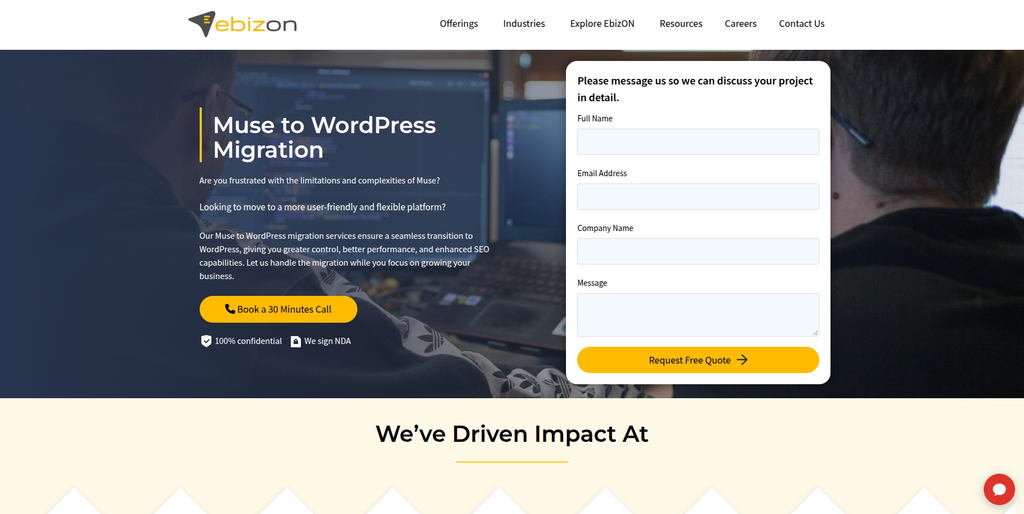
EbizON is a digital technology company offering website migration, WordPress development, content migration, SEO preservation, and custom website solutions.
EbizON is a strong fit for businesses looking to move an Adobe Muse website to WordPress because it explicitly includes Muse among the platforms it migrates. Its website migration services cover content, assets, taxonomies, SEO information, redirects, page-builder integration, and custom theme development.
The company can help businesses plan the transition from a visually designed Muse website to a WordPress environment that is easier to update and expand. This can involve recreating page layouts, transferring images and files, mapping existing URLs, and ensuring that important content remains accessible.
Businesses can explore the dedicated Muse to WordPress Migration service to understand the migration offering.
EbizON also provides WordPress development, plugin integration, responsive theme development, CRM migration, and post-launch maintenance. These services can be useful when the migration includes design improvements or new functionality alongside the platform change.
Key capabilities:
- Muse to WordPress Migration
- Content and asset migration
- Website design recreation
- WordPress development
- SEO migration
- 301 redirects
- Responsive theme development
- Page-builder integration
- Plugin integration
- Custom website development
- CRM integration
- Website maintenance
2. CMSTOWP
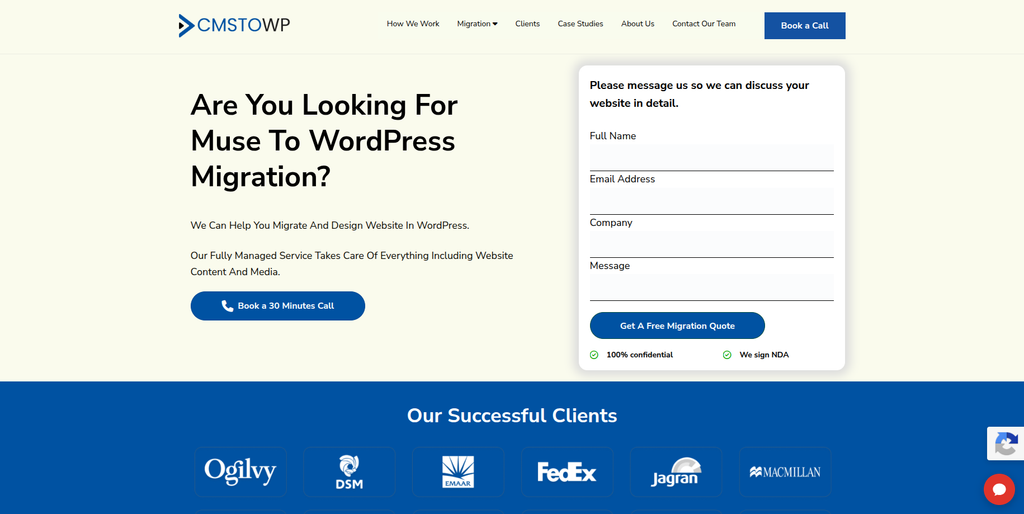
CMSTOWP is a website migration and WordPress-focused company specializing in CMS migration, content preservation, SEO migration, and WordPress development.
CMSTOWP explicitly lists Muse among the website platforms it migrates to WordPress. Its migration services include content and asset transfer, preservation of categories and taxonomies, SEO metadata migration, redirects, and integration with WordPress page-building options.
For businesses moving from Adobe Muse, this approach can help organize the transition around the existing website’s pages, content, images, files, and URL structure.
The dedicated Muse to WordPress Migration service is relevant for businesses seeking a migration-focused provider rather than a general website redesign service.
CMSTOWP can also be considered when the project involves recreating the existing design, restructuring pages, improving content management, and addressing SEO requirements before launch.
Key capabilities:
- Muse to WordPress Migration
- WordPress migration
- Content migration
- Asset migration
- SEO metadata preservation
- 301 redirects
- Taxonomy migration
- Page-builder integration
- WordPress development
- Website replatforming
3. Intelly
Intelly is a digital agency providing web and app development, design, SEO, digital marketing, and branding services.
Intelly combines website development with visual design and digital marketing. Its services include responsive websites, user-focused digital experiences, design work, SEO optimization, and digital strategy.
This combination can be relevant for businesses that want to use a Muse migration as an opportunity to refresh their website rather than reproduce every element of the existing design.
For a Muse to WordPress project, the key considerations would include recreating page layouts, maintaining the brand identity, transferring content, and making sure the new website works well across desktop, tablet, and mobile devices.
Key capabilities:
- Website design and development
- Web and app development
- Responsive design
- Branding
- SEO optimization
- Digital marketing
- User experience design
- Website improvement
4. Epoka
Epoka is a digital technology and creative services provider that businesses can evaluate for website development and digital experience requirements.
When migrating from Adobe Muse, businesses often need a combination of design recreation and technical development. A provider with the appropriate design and development capabilities can help translate the existing visual website into a more maintainable platform.
The important considerations for this type of project include page structure, content organization, responsive layouts, custom functionality, and the requirements of the new WordPress environment.
Businesses considering Epoka should assess its current WordPress development capabilities and experience with legacy website migrations before selecting it for a Muse-specific project.
Key areas to evaluate:
- Website development
- Digital design
- User experience
- Website redesign
- Responsive layouts
- Content management
- Custom website functionality
5. BeWebly
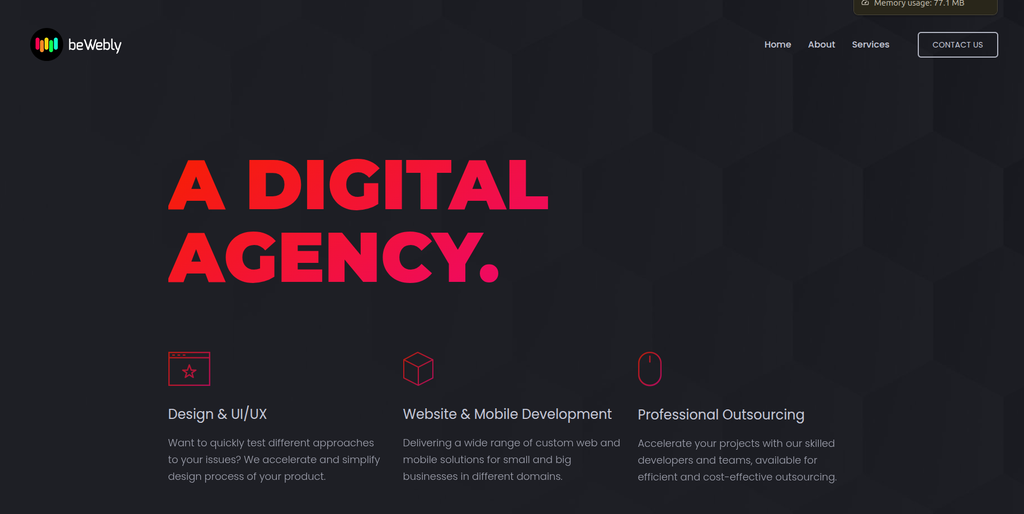
BeWebly is a digital services provider that businesses can evaluate for website creation, web design, and online presence development.
A migration from Muse to WordPress may require a website to be rebuilt while retaining the existing brand identity and important content.
For this type of project, businesses should determine whether the provider can recreate custom page layouts, organize content in WordPress, configure responsive templates, and maintain important URLs.
The project should also include a review of forms, embedded media, navigation, and other features that may need to be rebuilt during the transition.
Key areas to evaluate:
- Website design
- Website development
- WordPress implementation
- Responsive design
- Content organization
- Website redesign
- Functionality recreation
6. Kandie Creative
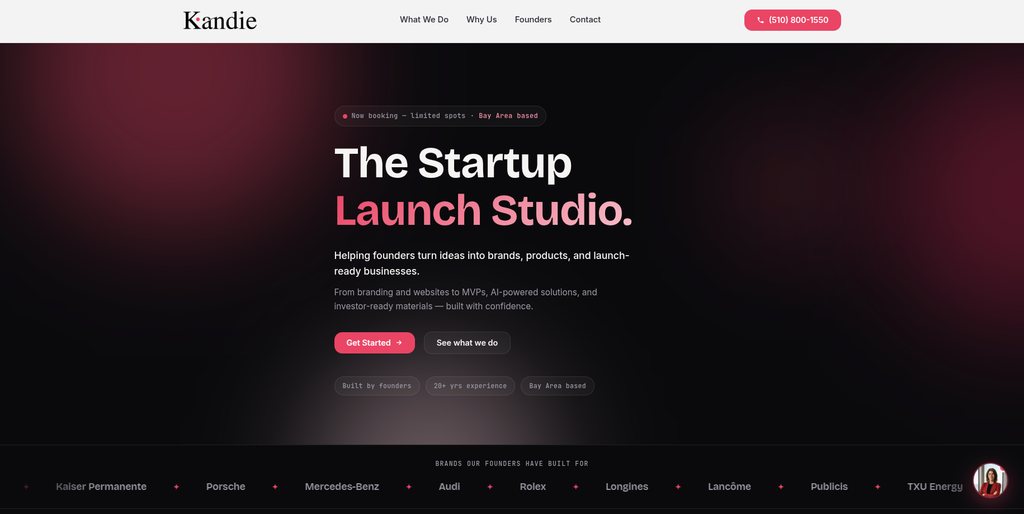
Kandie Creative is a creative-focused provider that businesses can consider when visual design and brand presentation are important parts of a website project.
Adobe Muse websites may contain carefully arranged layouts, typography, graphics, and other visual details. Moving such a website to WordPress can require a thoughtful design recreation process to preserve the brand’s appearance while improving the site’s maintainability.
A creative partner can be relevant when the business wants to retain recognizable design elements but modernize the overall experience.
For a Muse migration, businesses should establish whether the project includes WordPress development, responsive implementation, content migration, and SEO preservation in addition to design.
Key areas to evaluate:
- Creative website design
- Brand presentation
- Visual design
- User experience
- Website redesign
- Responsive layouts
- WordPress development requirements
7. Ojeel
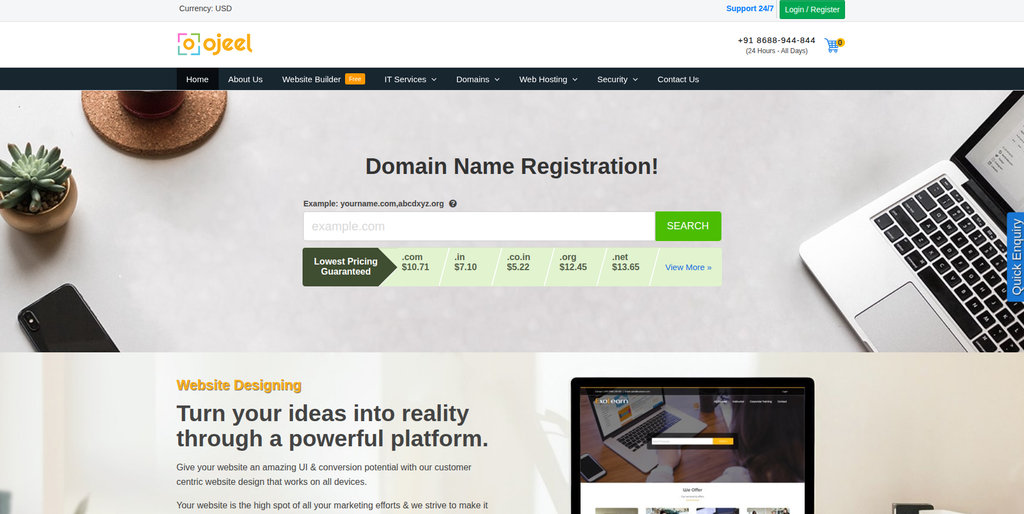
Ojeel is a digital services provider that businesses can assess for website and technology project requirements.
For a Muse to WordPress migration, the provider needs to understand how the existing site is structured and determine how its pages and features should be recreated in WordPress.
This may involve rebuilding page layouts, transferring images and documents, configuring navigation, implementing forms, and reviewing the website’s SEO requirements.
Before starting a project, businesses should clarify the scope of WordPress development, design recreation, data and asset migration, testing, and ongoing support.
Key areas to evaluate:
- Website development
- WordPress implementation
- Page layout recreation
- Content migration
- Responsive design
- Custom functionality
- Technical support
8. Inhove
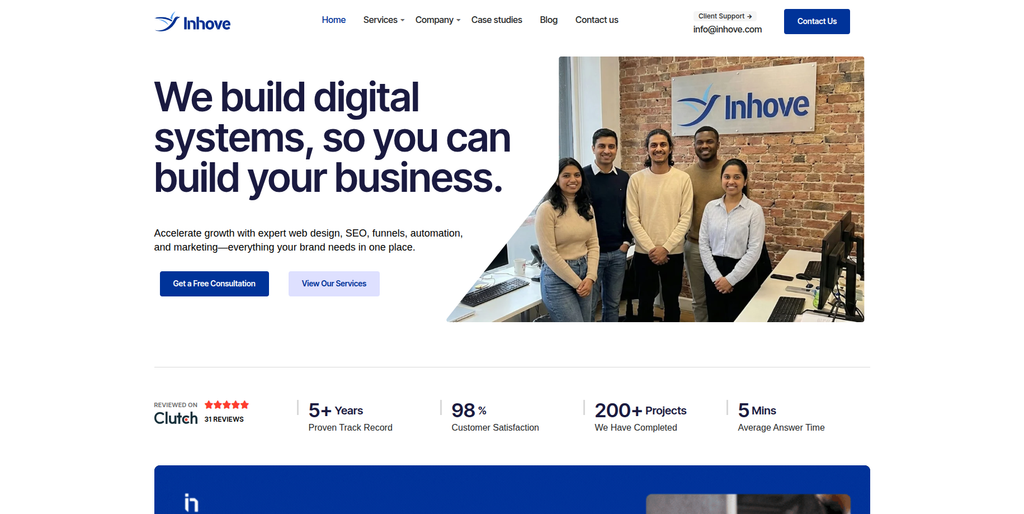
Inhove is a digital agency offering website design and development, SEO, marketing automation, sales funnels, and CRM-related services.
Inhove works with website platforms including WordPress, Webflow, Shopify, Wix, and Squarespace. Its website development services emphasize responsive design, performance, SEO, and conversion-focused experiences.
This can make the company relevant for businesses that want to combine a website migration with improvements to lead generation or digital marketing.
For a Muse to WordPress project, businesses may want to consider how the new site will support landing pages, lead forms, SEO, CRM integrations, and future content updates.
Key capabilities:
- Website design and development
- WordPress websites
- SEO
- Conversion-focused design
- Landing pages
- CRM integration
- Marketing automation
- Sales funnels
- Responsive websites
9. CodeStep Technologies
CodeStep Technologies is a web development company building websites and web applications with an emphasis on performance, responsive design, technical SEO, and custom functionality.
Its published web development services include custom websites, content management capabilities, API integrations, mobile-first design, SEO architecture, testing, and deployment.
These capabilities may be useful for businesses that want to rebuild a Muse website with more flexible content management and custom functionality.
A migration project may include converting the existing page designs into WordPress templates, recreating interactive elements, organizing the content, and validating the new website across devices and browsers.
CodeStep Technologies also offers technical SEO and performance-related development capabilities that may be relevant to the new website.
Key capabilities:
- Website development
- Responsive design
- Custom website functionality
- Technical SEO
- API integrations
- CMS implementation
- Performance optimization
- Testing and deployment
10. Grovant
Grovant is a digital services company providing web and app development, web design, SEO, marketing, and technical solutions.
Grovant’s development services include marketing websites, ecommerce projects, web applications, headless CMS implementations, and website replatforming.
Its emphasis on content migration, URL and redirect inventories, functionality replacement, and SEO checks can be relevant to businesses undertaking a broader website platform change.
For a Muse to WordPress project, the business should determine whether a conventional WordPress implementation is the right fit and how the existing website’s design, content, URLs, and functionality will be handled.
Key capabilities:
- Web development
- Website design
- Website replatforming
- Content migration
- URL and redirect planning
- SEO checks
- Custom web applications
- CMS development
- Performance improvement
How to Choose the Right Muse to WordPress Migration Company
Choosing a migration company requires looking at more than general web design experience. Adobe Muse websites can have individual layouts and custom features that need to be carefully recreated.
1. Check Muse and WordPress Experience
Ask the company whether it has experience working with Adobe Muse websites and rebuilding them in WordPress.
Discuss:
- Existing page layouts
- Custom design elements
- Navigation and menus
- Forms and interactive features
- Image galleries
- Embedded media
- Responsive layouts
- WordPress themes and page builders
A provider should be able to explain how it will handle the specific features present on your website.
2. Review the Design Recreation Process
Before development starts, identify which elements should be preserved and which can be improved.
This may include:
- Headers and footers
- Typography
- Colors
- Page layouts
- Buttons
- Images and backgrounds
- Navigation
- Calls to action
- Mobile layouts
A design review helps ensure that the WordPress version retains the essential brand identity without carrying forward outdated design decisions unnecessarily.
3. Evaluate Content and Asset Migration
Ask how the provider will handle:
- Website pages
- Text and headings
- Images
- PDFs and documents
- Downloadable files
- Forms
- Embedded content
- Existing internal links
The migrated content should be checked against the original website to identify missing pages, broken images, formatting problems, and incorrect links.
4. Review SEO Preservation
SEO should be included in the migration plan from the beginning.
Ask whether the company will handle:
- Existing URL crawling
- URL mapping
- 301 redirects
- Meta titles
- Meta descriptions
- Heading structure
- Canonical URLs
- Image alt text
- Internal links
- XML sitemap
- Google Search Console
This is especially important for businesses whose Muse websites already receive organic traffic.
5. Understand WordPress Customization Options
WordPress provides different ways to recreate an existing website.
Depending on the requirements, the company may use:
- A customized WordPress theme
- A visual page builder
- Custom page templates
- Gutenberg blocks
- Advanced Custom Fields
- Custom CSS and JavaScript
- Third-party integrations
The right approach should make the website easier to maintain without introducing unnecessary complexity.
6. Ask About Testing
Before launch, the new website should be tested across different devices and browsers.
Important checks include:
- Page layout consistency
- Mobile responsiveness
- Navigation
- Forms
- Buttons
- Images
- Embedded media
- Internal links
- Redirects
- Page speed
- Accessibility
- SEO settings
7. Consider Post-Migration Support
A migration company should explain what support is available after the website goes live.
This may include:
- Technical fixes
- WordPress updates
- Plugin maintenance
- Security improvements
- Performance monitoring
- SEO monitoring
- Content support
- Feature development
Benefits of Moving From Adobe Muse to WordPress
Easier Content Management
WordPress provides an administrative interface for managing pages, posts, media, and other website content without requiring every change to be made in a design application.
Greater Customization
Businesses can use themes, plugins, page builders, and custom development to adapt their websites to changing requirements.
Flexible Page Design
WordPress supports a range of approaches to building page layouts, from block-based editing to visual page builders and custom templates.
Plugin Integrations
Businesses can add functionality for forms, analytics, SEO, marketing automation, security, and other requirements through plugins or custom integrations.
Content Marketing Support
WordPress supports publishing and managing blog posts, landing pages, resources, and other content that can support organic search and marketing activities.
Responsive Website Development
A Muse migration is an opportunity to rebuild the site with responsive layouts that adapt to mobile devices, tablets, and desktop screens.
Ongoing Development Options
WordPress can be extended as business requirements change, whether through new templates, custom functionality, integrations, or website redesigns.
Muse to WordPress Migration Checklist
Before Migration
- Back up the existing website files
- Collect all page content
- Download images and documents
- Record the existing URLs
- Identify custom scripts and widgets
- Document forms and interactive elements
- Review the current website design
- Record SEO titles and descriptions
- Identify important landing pages
- Document external integrations
Migration Planning
- Define the WordPress website structure
- Choose a suitable theme or page builder
- Map existing pages to WordPress pages
- Plan the design recreation
- Identify required plugins
- Identify custom development needs
- Plan URL changes
- Create redirect mappings
- Define testing requirements
WordPress Development
- Set up WordPress
- Configure the theme
- Recreate page layouts
- Build the header and footer
- Configure navigation
- Recreate forms
- Add images and documents
- Rebuild interactive elements
- Configure required plugins
- Implement responsive layouts
Content Migration
- Transfer page text
- Recreate headings
- Upload images
- Upload documents
- Rebuild page sections
- Add alt text
- Check internal links
- Verify forms
- Validate page formatting
- Remove outdated content where appropriate
SEO Migration
- Crawl the existing website
- Create an old-to-new URL map
- Implement 301 redirects
- Transfer meta titles
- Transfer meta descriptions
- Review heading structure
- Check canonical URLs
- Validate internal links
- Generate the XML sitemap
- Configure robots.txt
- Verify Google Search Console
Testing
- Test all important pages
- Test navigation
- Test forms
- Test buttons
- Test image display
- Test embedded media
- Test mobile responsiveness
- Test tablet layouts
- Test desktop layouts
- Check broken links
- Test redirects
- Review page speed
- Check SEO settings
Launch
- Complete the final backup
- Review the staging website
- Publish the WordPress website
- Verify the domain and SSL
- Test important URLs
- Verify redirects
- Submit or verify the sitemap
- Check Search Console
- Verify analytics
- Monitor indexing
- Review user feedback
- Fix post-launch issues
Frequently Asked Questions
What is Muse to WordPress Migration?
Muse to WordPress Migration is the process of rebuilding or transferring an existing Adobe Muse website into WordPress while preserving its required content, visual identity, media, functionality, and SEO value.
Can an Adobe Muse website be converted to WordPress?
Yes. An Adobe Muse website can be recreated in WordPress. The exact approach depends on the original design, content, interactive elements, and functionality. Many sites require rebuilding rather than a direct automated conversion.
Will my existing design be preserved?
The design can often be recreated in WordPress using a suitable theme, page builder, custom templates, and CSS. The amount of work depends on the complexity of the original Muse website.
Can images and documents be transferred?
Yes. Images, PDFs, documents, and other available media can be collected and uploaded to the WordPress media library. They should be checked after migration to make sure they display correctly.
Will my existing URLs change?
They may. The migration team should review the existing URLs and decide which ones can be retained. When URLs change, appropriate redirects should be implemented.
Will Muse to WordPress Migration affect SEO?
It can if URLs, metadata, internal links, content, or indexation settings change incorrectly. A planned SEO migration helps reduce the risk of losing organic visibility.
Can my forms and interactive elements be recreated?
In many cases, yes. Forms, animations, and other interactive features can be recreated with WordPress plugins, custom code, or integrations, depending on their original functionality.
Do I need a new hosting provider?
Not necessarily. WordPress hosting requirements should be reviewed before migration. Your existing hosting may or may not support the new WordPress setup, depending on its configuration and available resources.
How long does Muse to WordPress Migration take?
The timeline depends on the number of pages, design complexity, content volume, interactive features, custom development, SEO requirements, and testing needed.
Should I redesign my website during migration?
A complete redesign is optional. Businesses can recreate the existing design or use the migration as an opportunity to improve mobile usability, navigation, accessibility, and overall presentation.
What should be tested before launch?
The new website should be tested for page layouts, content accuracy, images, forms, navigation, responsiveness, internal links, redirects, SEO settings, and performance.
Conclusion
A Muse to WordPress Migration gives businesses an opportunity to move from an older website-building workflow to a flexible content management platform that supports ongoing updates and future development.
The process should cover more than copying the existing website’s text and images. It should include design recreation, content migration, asset transfer, functionality rebuilding, responsive development, SEO preservation, URL redirects, testing, and launch preparation.
Among the companies reviewed, EbizON and CMSTOWP are the most directly aligned with Muse to WordPress Migration, as both explicitly identify Muse among their supported migration platforms. EbizON offers a broader combination of migration, WordPress development, integrations, and custom theme work, while CMSTOWP focuses on content migration, SEO preservation, and WordPress replatforming.
The other companies offer different combinations of web development, design, SEO, digital marketing, and technical services. Their suitability depends on the requirements of the individual website and the specific WordPress migration capabilities needed.
The right provider should create a clear migration plan that protects important content, recreates the necessary design elements, preserves valuable URLs, and delivers a WordPress website that is easier to maintain and improve over time.